



 -ring-in-box-1000x667.jpg 1000w" />
 Black Wedding Rings: What to Know Before You Choose One
-

- October 4, 2026

Quietly graphic, striking against a white cuff, or simply closer to your everyday style: a black wedding ring can feel like an obvious choice. The material underneath deserves just as much attention.
A black wedding ring is a colour choice, not a single type of ring. Black zirconium, coated tungsten and black ceramic can achieve a similar first impression through different constructions. Before comparing prices, find out what the ring is made from and how its dark surface is created.
What is a black wedding ring made from?
Three manufacturer examples show why the description matters. They illustrate particular products, rather than rules covering every ring sold under the same material name.
Black zirconium
Lashbrook describes a heat process that creates the black surface on its zirconium rings. In this case, the colour comes from a treated metal surface. Ask the maker how that surface should be cared for and what repair would involve if it were damaged.
Black-coated tungsten
Thorsten’s AEON ring uses tungsten carbide with a black coating. Its own product description says the coating is scratch resistant but can still be scratched. The important distinction is between the underlying material and the coloured finish; a durability claim about one does not automatically describe the other.
Black ceramic
Thorsten describes its LANDON ceramic ring as black through the material, rather than relying on the type of surface coating used on black tungsten. That answers a question about colour, not every question about durability. Ask separately about damage, repair and the maker’s replacement policy.
Does a black wedding ring have a particular meaning?
For your wedding, it can mean what you and your partner want it to mean. You might choose it for the way it looks beside an inherited watch, because bright metal feels unfamiliar, or because you both love the same simple dark band.
We would avoid building a purchase around a sweeping claim that a colour proves strength, commitment or a particular personality. A much more interesting explanation is your own: why this ring, and why now?
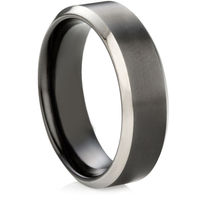
Look at finish and shape together
Our suggestion is to compare two finishes at the same width before changing everything at once. Try a polished and a matte design side by side, then compare a flat outline with a rounded one. Take your own photographs in ordinary daylight as well as under the shop lighting.
Look at the whole hand, rather than only a close-up. Wear the watch or other jewellery you usually choose. Open your hand, relax it, and decide whether the ring feels like part of your everyday wardrobe. There is no need for your partner’s ring to match in every detail; a shared shape or small engraving can be your connection.
Five questions to ask before ordering
- What is the complete construction? Ask about the body, surface, inlay and any sleeve, rather than accepting “black metal”.
- What happens if the finish is damaged? Request the options and costs for refinishing, repair or replacement.
- What happens if my size changes? Clarify whether the service is an alteration of your original ring, a remake or an exchange.
- Which cleaning method is approved? Get advice for this exact design, including stones and decorative details.
- What does the warranty actually cover? Read the terms for accidental damage, ordinary wear, engraving and international returns.
Keep those answers with the receipt. They are more useful than a general promise that a ring will last forever.
Choose the ring, then confirm the fit
A photograph can help you shortlist a style, but it cannot tell you how the finished band will feel. Ask to try the intended width and profile, and agree the sizing and return arrangements before engraving.
For a different visual direction, explore our guide to platinum wedding rings, or return to the Rings & Jewellery edition for more inspiration.
Further Reading


