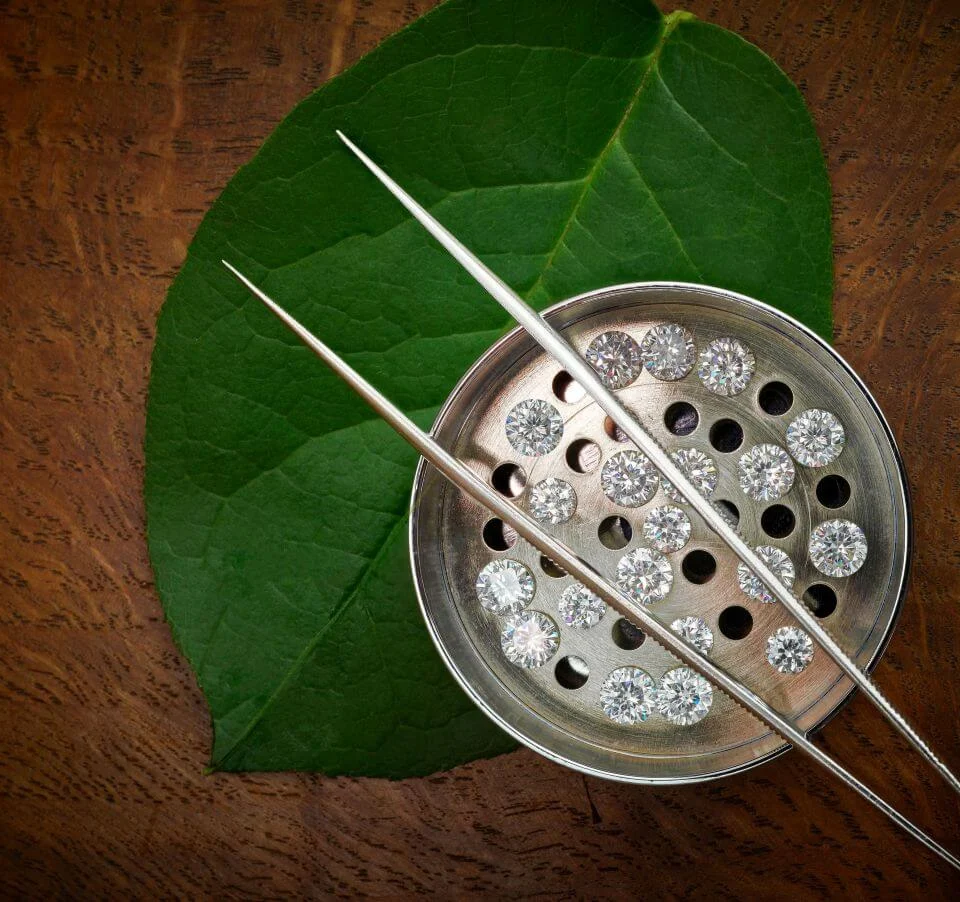
Lab Grown Diamond Engagement Rings: Pros, Cons & the UK Buyer’s Guide
Contents
- What Exactly Is a Lab Grown Diamond?
- Lab Grown vs Mined Diamonds: Pros & Cons
- Key Advantages
- Things to Consider (Possible Downsides)
- Understanding Quality: The 4Cs & Certification
- Certification for Trust
- How Much Do Lab Grown Diamond Rings Cost?
- Choosing Your Ring: Shape, Setting & Metal
- Diamond Shape
- Settings & Practicality
- Metal Choices
- Ethics & Sustainability Balanced View
- Buying a Lab Grown Engagement Ring in the UK: Practical Checklist
- Everything You Need to Know About Lab Grown Diamond Rings
- Are lab grown variants real diamonds?
- Are lab diamonds just synthetic or fake stones?
- Will a lab grown diamond last as long as a mined diamond?
- Will a lab diamond pass a diamond tester?
- Do lab grown diamonds hold their value?
- Can you tell the difference between lab grown and mined just by looking?
- Final Thoughts: Choosing the Ring That Feels Like Yours
A modern bride’s guide to choosing a lab diamond ring you’ll love for a lifetime
Finding an engagement ring is one of the most exciting parts of planning a wedding. It’s a moment filled with anticipation, daydreams about the proposal, and thoughts about the life you’re about to build together.
In recent years, more couples in the UK have started looking beyond traditional mined diamonds and towards lab grown diamond rings. This modern alternative offers the same spectacular sparkle and durability as mined stones, often at a more accessible price, with a contemporary, transparent story behind it. In bridal fashion, lab diamonds are increasingly seen as a smart way to get a luxury look without stretching the budget.
This guide walks you through:
- What lab grown diamonds actually are
- How they compare to mined diamonds
- The key pros and cons to weigh up
- How to choose the right shape, setting and metal
- Practical UK buying checks and FAQs
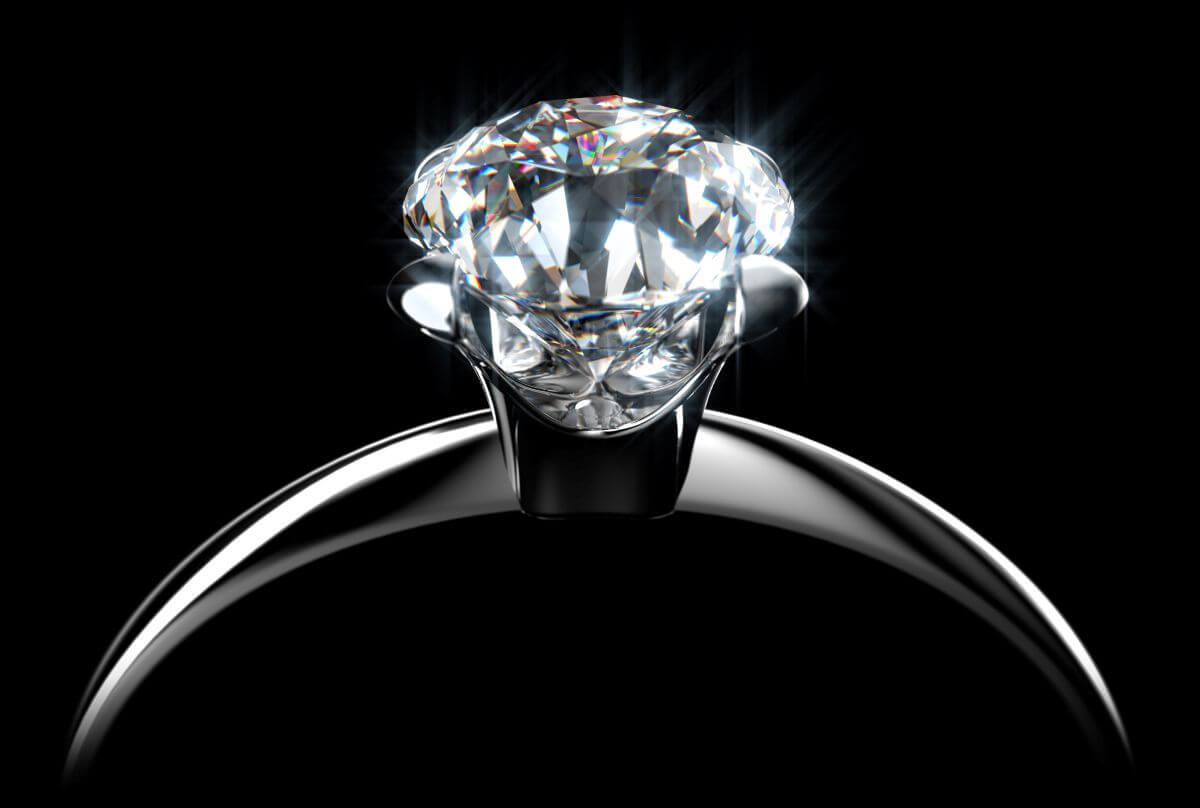
A solitaire diamond engagement ring with a bright round centre stone, highlighting the timeless elegance of a simple lab diamond design
What Exactly Is a Lab Grown Diamond?
A lab grown diamond (often simply called a lab diamond) is a real diamond created in a laboratory rather than deep underground. You might see them referred to as synthetic diamonds in older or technical texts, but that can be misleading. These are not fake stones, but genuine diamonds grown by humans instead of nature.
Using advanced technology, a tiny diamond “seed” is placed in an environment that replicates the conditions under which natural diamonds form, usually one of two methods:
- High Pressure High Temperature (HPHT)
- Chemical Vapour Deposition (CVD)
Over time, carbon atoms bond to the seed and build up around it, forming a genuine diamond crystal. The result is a gemstone that is:
- Chemically identical to a mined diamond
- Physically identical (hardness, durability, density)
- Visually identical (sparkle, brilliance, fire)
To the naked eye, and even under magnification, a lab grown diamond looks just like a mined diamond with the same specifications. The critical difference is the origin, which affects cost, ethics and how traceable the stone is.
You might also come across other stones such as moissanite or diamond simulants, which look similar but are not diamonds at all. For a clear comparison, see this GIA guide to simulants, moissanite and lab grown diamonds.
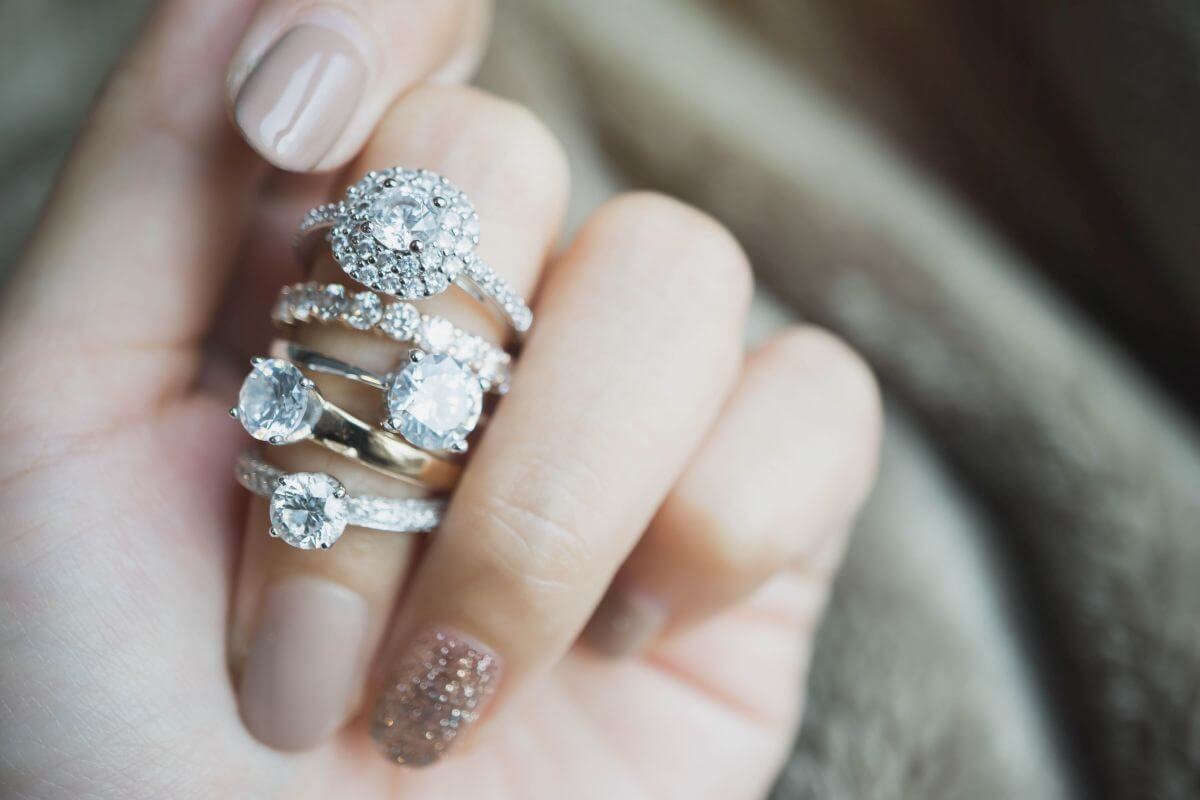
A selection of diamond engagement rings in solitaire and halo designs, showing how lab grown diamonds work across different styles and metals
Lab Grown vs Mined Diamonds: Pros & Cons
Modern couples are drawn to lab grown diamonds for their value, clarity and modern story, but it’s important to see the full picture before you say “yes”.
Key Advantages
| Advantage | Benefit To A UK Buyer |
| Better value for money | You can often choose a larger carat weight or a higher quality diamond (better colour and clarity) for the same budget, or invest more in the setting or metal (for example, platinum). |
| High consistency and quality | Because lab conditions are controlled, many stones naturally exhibit excellent clarity and bright white colour grades. |
| Ethical & traceable origin | Lab grown diamonds avoid traditional mining and complex supply chains. It’s generally easier to understand and verify the stone’s production, which appeals to couples who prioritise sustainability and transparency. |
| Independent certification | Like mined diamonds, lab grown stones are graded by established labs such as GIA and IGI, using the same global 4Cs standards. |
| “Conflict-free” by origin | Because a lab diamond is grown in a controlled environment rather than extracted from a war zone, it is naturally positioned as a conflict-free option, which many couples find reassuring. |
Things to Consider (Possible Downsides)
- Resale value
Lab grown diamonds typically have lower resale value than high-quality mined diamonds. Most engagement rings are sentimental purchases, not investments, but it’s sensible to know this upfront. - Perception and tradition
Some people still feel a strong attachment to the idea of a “natural” diamond. If you’re concerned about family expectations or tradition, it’s worth having an open conversation. - Rapidly changing prices
As technology improves, lab grown diamonds have become more affordable. That’s great for buyers now, but it means long-term prices have tended to decrease over time.
If you understand these points and still love the idea of a lab grown stone, it’s very likely to be a good fit for you.
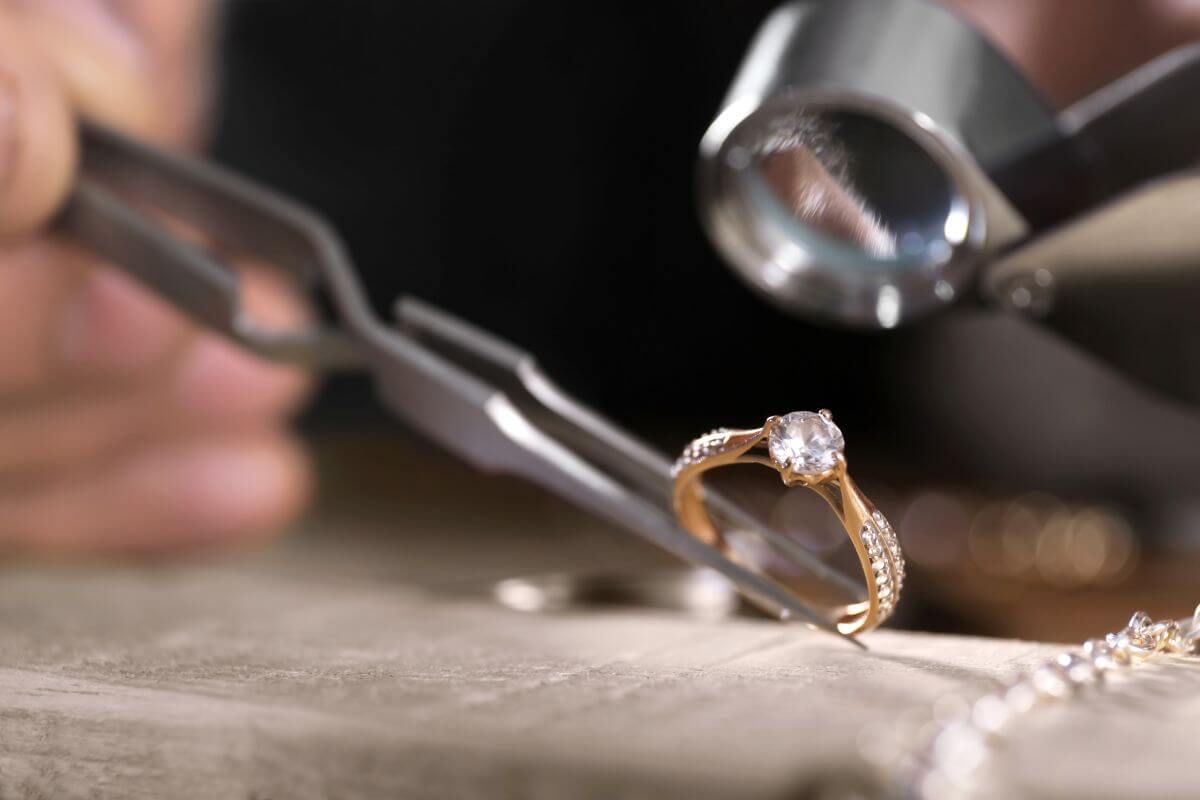
A jeweller inspecting a diamond engagement ring under magnification, emphasising the importance of quality checks and independent certification for lab grown diamonds
Understanding Quality: The 4Cs & Certification
To feel confident in your choice, you need to understand the 4Cs and check that the diamond has been independently certified.
The 4Cs at a Glance
| C | What It Means | What To Focus On (Practical Tips) |
| Cut | How well the diamond is shaped and faceted | The most important C for sparkle and brilliance. A great cut can make a diamond look larger and brighter. |
| Carat | The weight (size) of the diamond (1 carat ≈ 0.2 g) | Lab grown stones often let you go slightly larger for the same budget. Don’t chase size at the expense of cut. |
| Colour | How white or tinted the diamond appears (D–Z scale) | Near-colourless grades such as G–J usually offer the best balance of whiteness and value. |
| Clarity | The presence or absence of tiny internal or external marks | Aim for “eye-clean” clarity where no marks are visible to the naked eye; you won’t see the difference between top grades day to day. |
For many couples, a well-cut lab diamond in a near-colourless range with eye-clean clarity gives fantastic sparkle and value without paying a premium for perfection.
Certification for Trust
Look for a diamond graded by a reputable independent laboratory, such as:
- GIA (Gemological Institute of America)
- IGI (International Gemological Institute), or another recognised body
A proper certificate will list:
- The 4Cs (carat, cut, colour, clarity)
- Measurements
- Any extra notes (for example, fluorescence or laser inscription)
Many lab grown diamonds also have a tiny laser inscription on the girdle (invisible without magnification) that confirms their lab origin and matches the certificate number.
Alongside the certificate, always check the jeweller’s reputation:
- Read reviews from UK customers
- Look for clear returns, warranty and aftercare policies
- Confirm what’s included (resizing, cleaning, prong checks, polishing)
Many lab grown diamonds also have a tiny laser inscription on the girdle (invisible without magnification) that confirms their lab origin and matches the certificate number. You can see an example of how this is documented in an IGI lab grown diamond report.
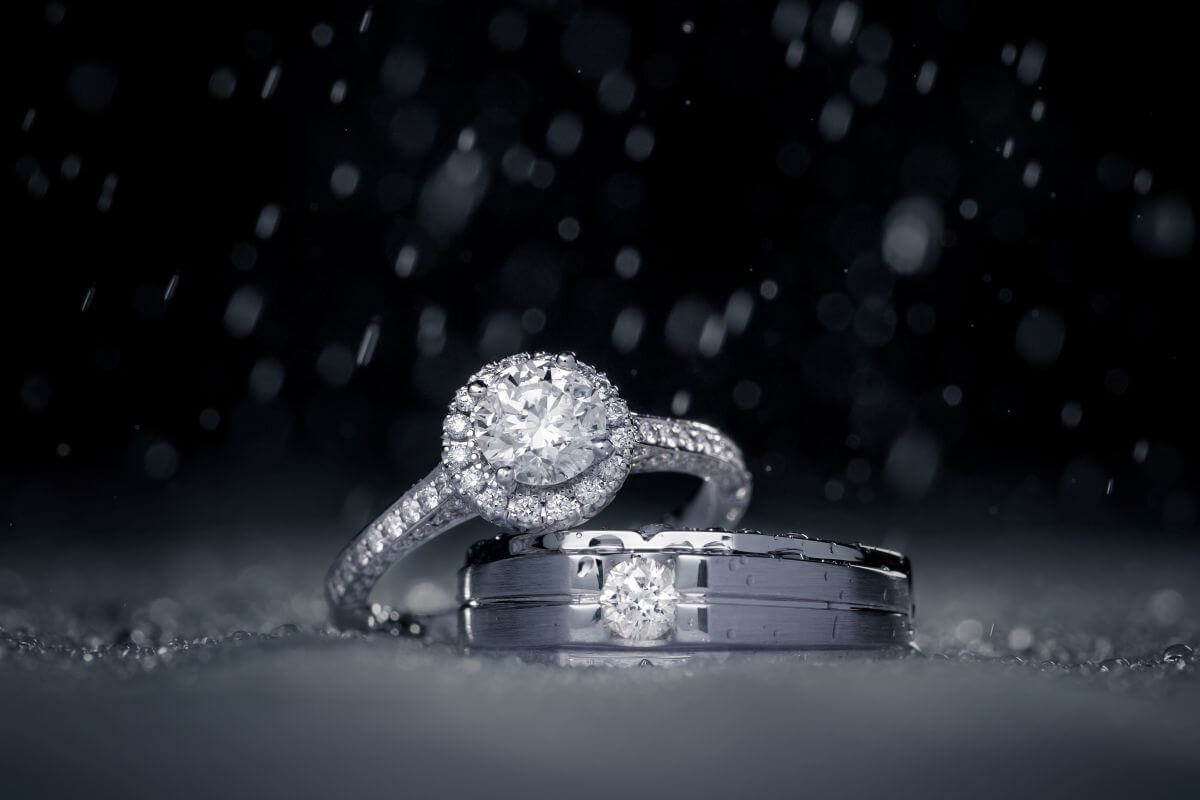
A shimmering diamond halo engagement ring with a coordinating wedding band, illustrating how lab grown diamonds can create a luxurious bridal set
How Much Do Lab Grown Diamond Rings Cost?
There’s no fixed price for a lab grown engagement ring, but in general:
- A lab grown diamond of the same size and quality as a mined diamond is usually noticeably less expensive.
- That can allow you to:
- Choose a larger carat
- Upgrade the cut, colour or clarity
- Invest in a higher-end setting or metal (for example, platinum or 18ct gold)
When deciding your budget, think about:
- Your total ring budget in £
For example, “We’d like to spend around £1,500–£3,000.” - Your priorities
Is size more important, or quality? Do you care more about a designer brand, or maximising sparkle?
Once you’re clear on priorities, choosing a lab grown stone becomes much simpler.
Choosing Your Ring: Shape, Setting & Metal
The aesthetic elements of your ring define its personality, sense of elegance and how it feels on your hand.
Diamond Shape
Each shape carries its own character and suits different styles.
| Shape | UK Aesthetic | Key Feature |
| Round brilliant | Classic, versatile, always in style | Maximum sparkle and fire; works in almost any setting. |
| Oval | Elegant, modern | Elongates the finger and often appears slightly larger than a round of the same carat. |
| Princess | Modern, fashion-forward | A square shape with crisp corners that combines brilliant sparkle with clean lines, a popular choice in contemporary engagement ring fashion. |
| Emerald & Asscher | Architectural, sophisticated | The striking “hall of mirrors” effect, more flashes than glitter. Great for understated glamour. |
| Cushion & radiant | Romantic, brilliant | Soft corners that blend vintage romance with modern fire and plenty of sparkle. |
| Pear & marquise | Distinctive, statement-making | Can make the finger look longer and slimmer; best with protective settings for the pointed ends. |
Think about how you use your hands day to day. If you’re very active or work with your hands, ask to try on shapes and settings that sit a little lower and feel secure.
Settings & Practicality
The setting determines both the look and how securely the diamond is held.
- Solitaire
Timeless and minimal, a single diamond on a simple band. Lets the stone take centre stage and pairs easily with most wedding rings. - Halo
A circle of smaller diamonds around the centre stone. Adds serious sparkle and can make the centre diamond appear larger, perfect if you want a more overt luxury feel. Modern halo designs range from delicate, slender halos to bold double halos that give maximum impact. - Three-stone (trilogy)
Often said to represent past, present and future. A meaningful choice if you love symbolism and symmetry. - Bezel
The diamond is wrapped in a slim rim of metal. Very secure and modern; ideal for active wearers who want to minimise snagging. - Vintage-inspired
Milgrain, engraving and decorative details. Perfect if you love romantic, antique-style jewellery with more character than a plain band.
When you try on different settings, pay attention not just to how they look in photos, but how they feel: do they catch on clothing, feel too high, or sit comfortably for everyday wear?
Metal Choices
The metal tone will completely change the mood of your ring.
- Platinum
Naturally white, very durable and slightly heavier. A great option if you like a weightier, luxurious feel and strong everyday wear. - White gold (usually 18ct or 9ct in the UK)
Bright and modern, enhances the whiteness of the diamond. Often rhodium-plated for extra shine, with re-plating needed over time. - Yellow gold
Warm and traditional, beautiful with both white and slightly warmer-tinted diamonds. A classic look that never really goes out of style. - Rose gold
Soft, romantic and flattering on many skin tones. Pairs beautifully with vintage-inspired and halo settings.
Some couples also love mixed-metal designs, for example, a white gold or platinum head for the diamond with a yellow gold band.
If you already wear jewellery every day, look at what you naturally reach for; your engagement ring should sit comfortably alongside it.
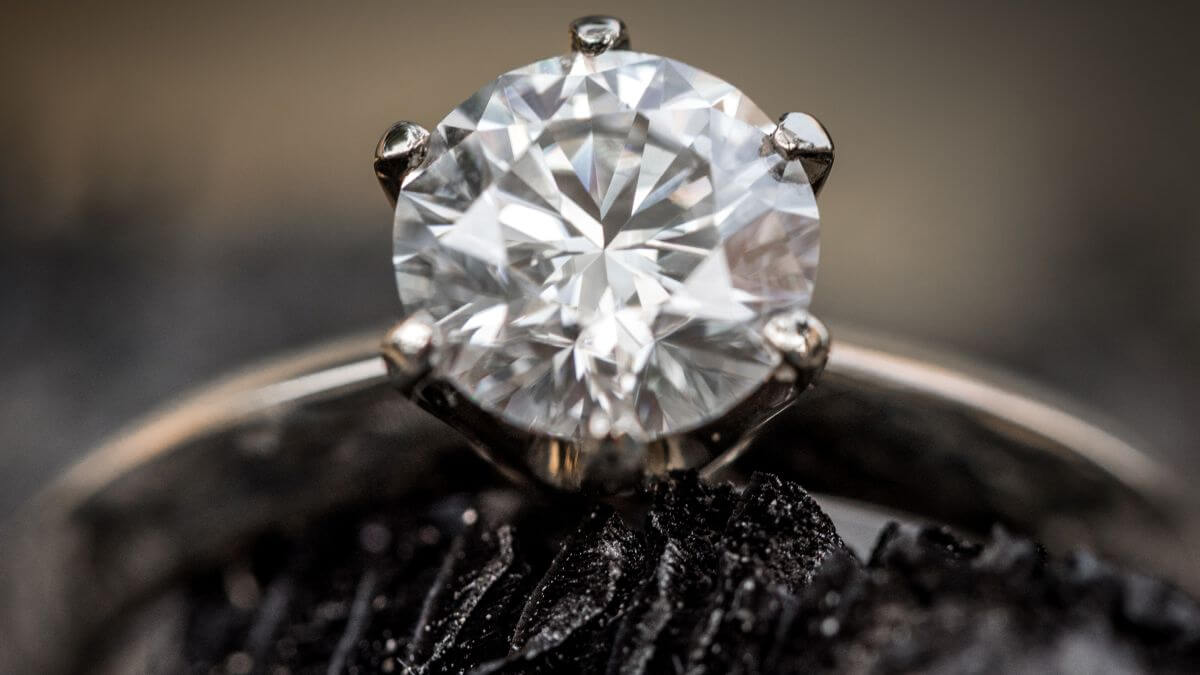
A classic round brilliant diamond engagement ring in a six-prong setting, showcasing the clean sparkle many couples love in lab grown stones
Ethics & Sustainability Balanced View
Many couples are drawn to lab grown diamonds because they feel like a more ethical or eco-friendly choice.
It’s true that:
- Lab grown diamonds avoid traditional mining, which can be associated with environmental disturbance and complex supply chains.
- It’s usually easier to trace how and where a lab grown diamond was produced, which supports genuinely conflict-free sourcing.
However:
- Lab grown diamonds still require energy-intensive processes. Some growers use renewable energy; others may not.
- Simple marketing labels such as “100% eco-friendly” or “ethical” can be oversimplified.
A thoughtful approach is to:
- Ask the jeweller about the energy sources used to grow their diamonds
- Look for brands that share transparent information about production and sourcing
- Focus on choosing a ring that aligns with your values, rather than chasing a perfect label
In the UK, brands must follow strict guidance when making environmental claims, to ensure they are clear, truthful and not misleading. The CMA’s Green Claims Code on GOV.UK is a helpful reference for understanding how “eco-friendly” or “sustainable” messaging should be used.
Buying a Lab Grown Engagement Ring in the UK: Practical Checklist
Before you commit to your ring, run through this quick UK-focused checklist:
- Have we agreed a clear budget in £?
Set a realistic range so you don’t fall in love with something that causes financial stress. - Is the diamond certified by an independent lab (GIA/IGI)?
Check that the certificate details match the stone, and ask about any laser inscription. - Are we both comfortable with lab grown vs mined?
Talk about expectations and any family or tradition concerns around diamond origin. - Do the 4Cs match what we want?
Prioritise cut first, then balance colour, clarity and carat according to your budget. - Is the metal properly hallmarked?
For rings sold in the UK, look for the required hallmark (for example, 750 for 18ct gold, 375 for 9ct gold, 950 for platinum) to confirm metal fineness. - Do we know the correct UK ring size?
UK sizes are letters (for example, K, L, M, N). Many jewellers offer free sizing or a printable guide. - What aftercare is included?
Check for warranty, free resizing, annual cleaning or prong checks. - What is the returns policy?
Essential if you’re buying online or ordering a ring you haven’t seen in person.
Everything You Need to Know About Lab Grown Diamond Rings
Are lab grown variants real diamonds?
Yes. They are real diamonds with the same physical, chemical and optical properties as mined diamonds. The difference is how they are created.
Are lab diamonds just synthetic or fake stones?
They’re sometimes referred to as synthetic diamonds, but they are not imitation gems. A lab diamond is made of the same material as a mined diamond (pure crystallised carbon) rather than glass or cubic zirconia.
Will a lab grown diamond last as long as a mined diamond?
Absolutely. Diamonds (whether lab grown or mined) are extremely hard and suitable for everyday wear when set securely.
Will a lab diamond pass a diamond tester?
Yes. Because lab grown diamonds are real diamonds, they usually register as diamond on standard testers.
Do lab grown diamonds hold their value?
They generally have lower resale value than natural diamonds, and prices have tended to fall as production technology improves. For most couples, an engagement ring is a sentimental purchase rather than an investment, but it’s wise to be aware of this.
Can you tell the difference between lab grown and mined just by looking?
To the naked eye, no. A lab grown diamond and a mined diamond with the same grades will look the same. Specialised equipment is usually needed to identify how the diamond was created.
Final Thoughts: Choosing the Ring That Feels Like Yours
Your diamond engagement ring should feel like a natural extension of your story together, not something chosen just to please a trend, a social feed or anyone else’s opinion.
Lab grown diamond engagement rings offer:
- Beautiful sparkle
- Excellent value
- A modern, transparent origin story
They bring together luxury, modern values and everyday practicality in a way that fits beautifully with today’s bridal fashion and more sustainable choices.
If you take the time to understand the 4Cs, verify the certification, think carefully about shape, setting and metal, and choose a trusted jeweller, you’ll be in a strong position to say “yes” to a ring you truly love.
Whether you end up with a delicate oval halo, a bold princess-cut lab diamond, or a vintage-inspired rose gold design, the most important thing is simple: when you look down at your hand, it should feel like you.